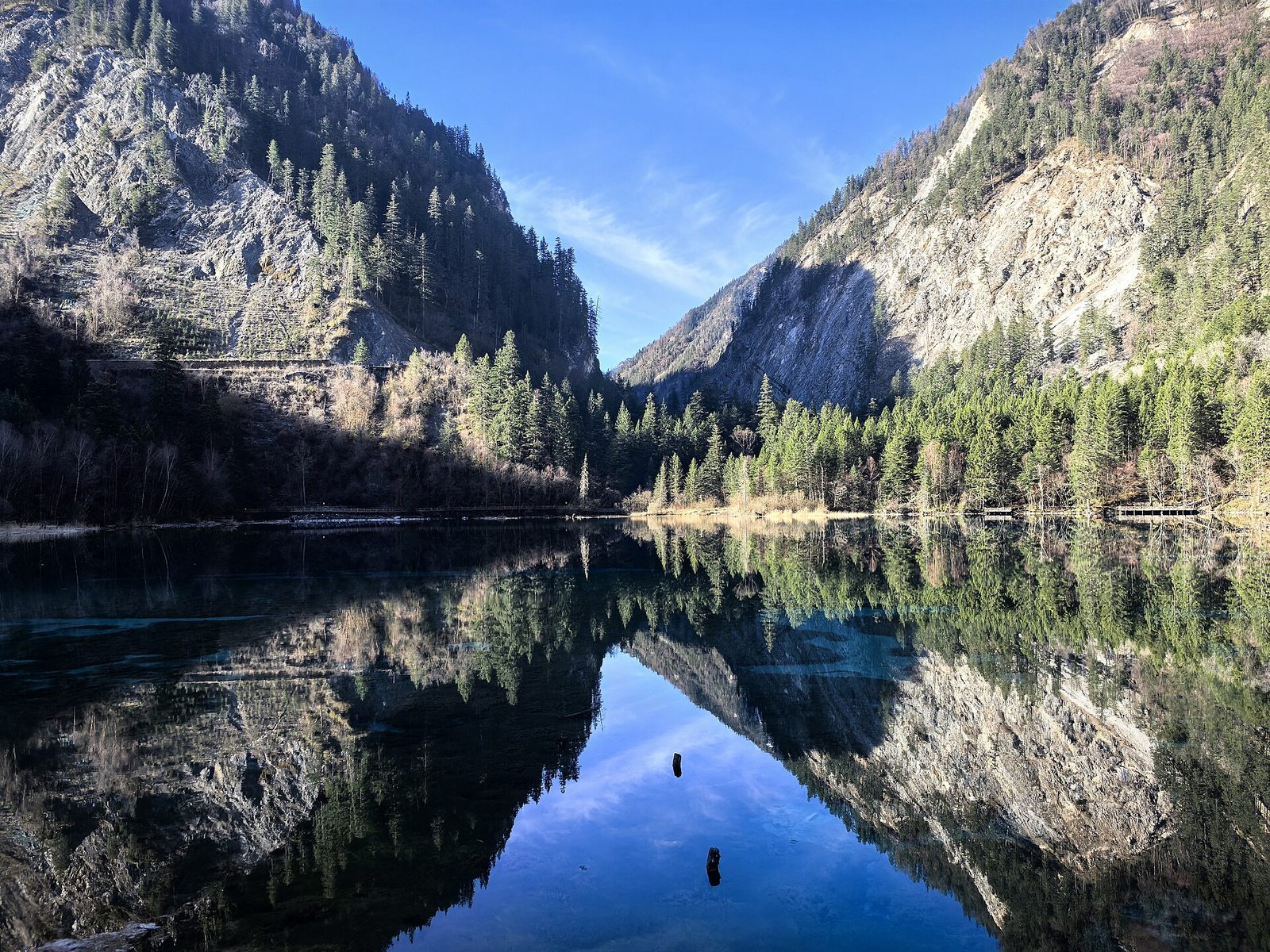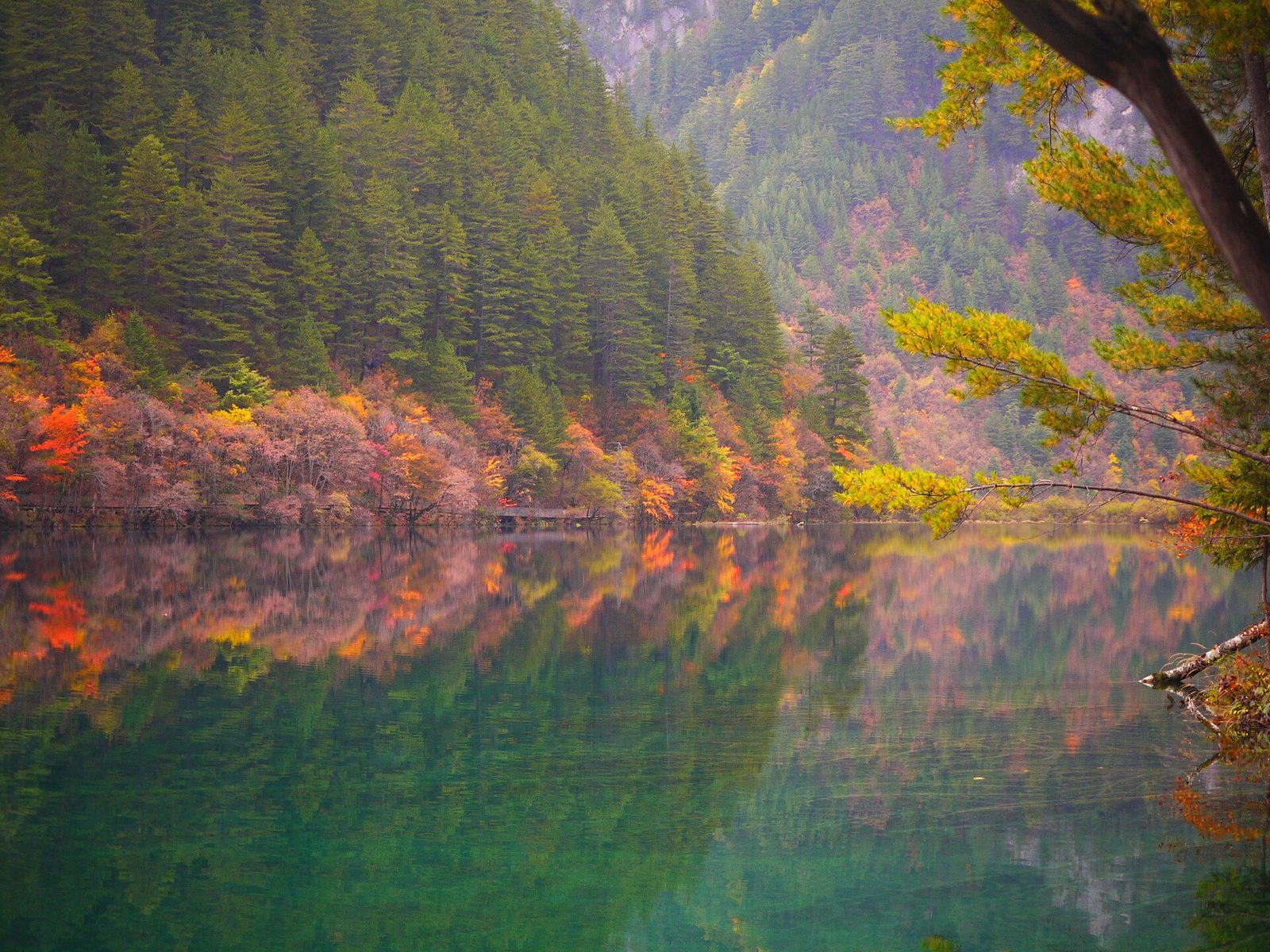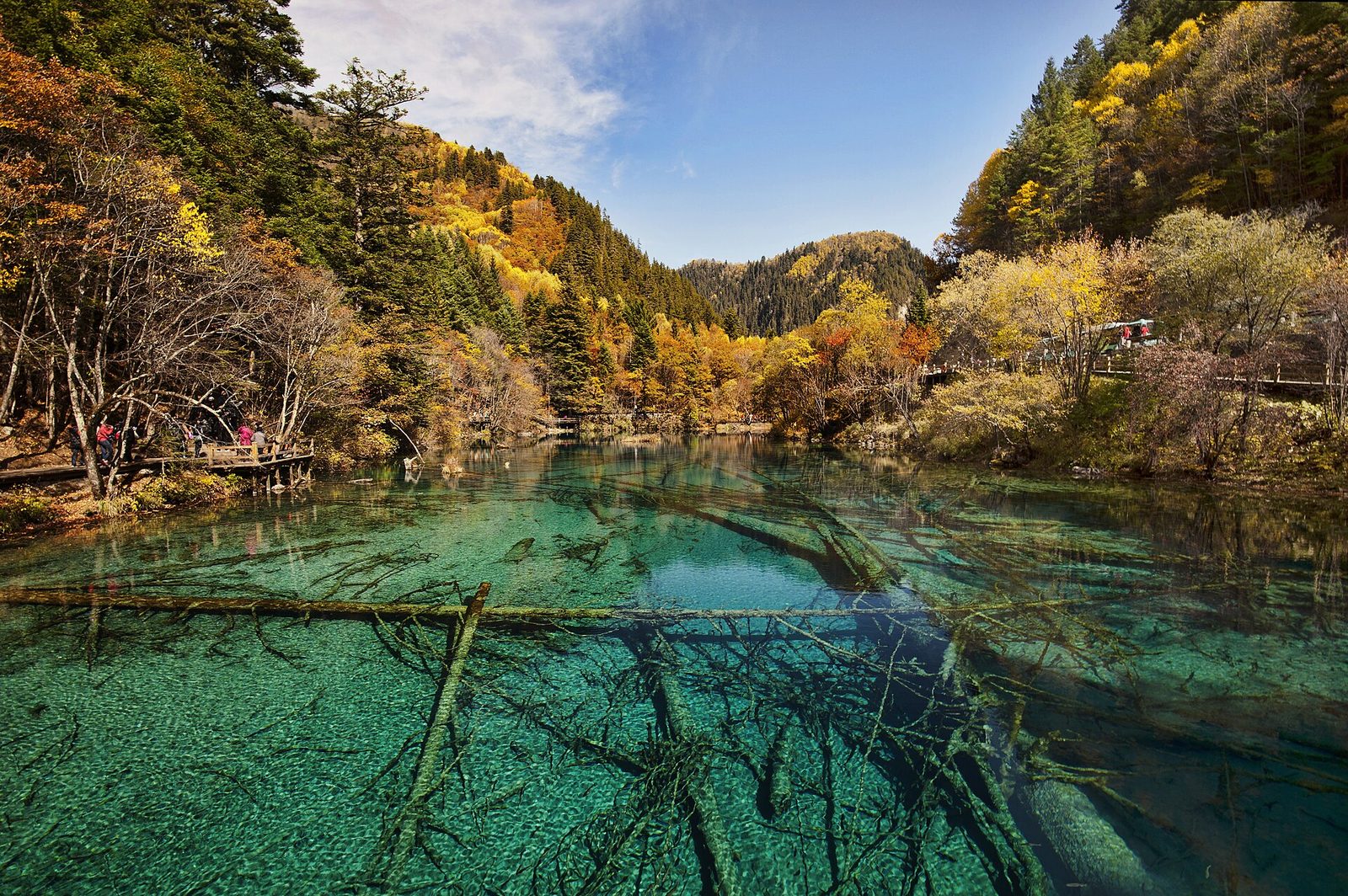
Why this route
This five-day route strings the alpine stops on the way to Jiuzhaigou into one escalating sequence. It opens with a four-hour visit to Bipenggou Scenic Area, moves to a three-stop glacier day at Dagu Glacier with its 4860 Cloud Café and the Yangrong Hade village, threads the heritage pair of Songzhou Ancient City and Chuanzhusi, and only then delivers the namesake: six hours inside Jiuzhaigou Scenic Area, before Munigou Scenic Area closes things out. The theme is a staged build-up — each day adds a different register of mountain scenery, so the flagship valley arrives on Day 4 already framed by a glacier, a village and an ancient city.
The day split does deliberate work. Listed stop time runs about 4 hours (Day 1), 5-plus hours across three stops (Day 2), 3 hours (Day 3), 6 hours (Day 4) and 4 hours (Day 5). The lighter Days 1 and 3 bracket the busiest multi-stop day, the longest single stop is reserved for Jiuzhaigou itself, and the trip winds down at Munigou rather than ending on the peak. Only Day 4 asks for one long sustained push; everywhere else the time is chunked into blocks of four hours or fewer.
Day by day
Day 1 — Bipenggou Scenic Area (4 hours). The route opens with a single unhurried stop: four hours at Bipenggou Scenic Area, a half-day block that eases you into the trip before the glacier leg.
Day 2 — Dagu Glacier, 4860 Cloud Café, Yangrong Hade (3 hours + untimed + 2 hours). The only three-stop day. Give Dagu Glacier its listed three hours, then continue to the 4860 Cloud Café — the name is its altitude, 4,860 metres, and no time limit is set, so it flexes to the day. Finish with two hours at Yangrong Hade village.
Day 3 — Songzhou Ancient City and Chuanzhusi (2 hours + 1 hour). The lightest listed day: two hours in Songzhou Ancient City, then one hour in Chuanzhusi town. Three hours in total — the route’s built-in breather.
Day 4 — Jiuzhaigou Scenic Area (6 hours). The reason the route exists. A single six-hour block, the longest stop of the trip, inside Jiuzhaigou Scenic Area; plan for the full six and don’t try to compress it.
Day 5 — Munigou Scenic Area (4 hours). A closing four-hour visit to Munigou Scenic Area — the same scenic-area format as Day 1, at a gentler pace than Day 4 — ends the route without a rush.
Trade-offs
Where the schedule flexes: Day 3 is the buffer. With only three listed hours (Songzhou Ancient City 2, Chuanzhusi 1), it can absorb a late arrival or an overrunning Day 2 without pushing anything back; if you gain time instead, spend it in the ancient city. On Day 2, the 4860 Cloud Café is the only untimed stop — if the three hours at Dagu Glacier run long, shorten or skip the café before cutting into Yangrong Hade’s two hours. Anyone uneasy at 4,860 metres can drop the café outright and lose neither timed stop.
What to cut, and who should simplify: for a four-day version, drop Day 5’s Munigou Scenic Area (4 hours) — Day 4’s six hours at Jiuzhaigou Scenic Area stay intact as the anchor. If you would rather start at the glacier leg, cut Day 1’s Bipenggou instead. The two four-hour bookend days are the cuttable ones; the Day 2–4 core is not. And if one unbroken six-hour block sounds like too much, simplify honestly: Day 4 cannot be split within this plan, so travellers who need shorter sightseeing stints should rebuild the route around it rather than squeeze it.