Why this route
These seven days pair the two most painted landscapes in East China: Hangzhou’s lake and tea hills, and the granite towers of Huangshan with the Hui villages at its foot. They are natural neighbors — one high-speed rail line runs from Hangzhou East to Huangshan North, and the classic villages of Hongcun and Xidi wait an hour or so beyond the mountain by road. Fly into Hangzhou, walk the lake and the hills for two days, ride over to the mountain for three, and spend what is left in the villages. One direction, no flights, no backtracking.
Three anchors carry the line. The causeways and tea terraces of West Lake anchor Hangzhou; the Huangshan Scenic Area — with two nights on top — anchors the middle; and the pond-fronted houses of Hongcun anchor the village days. The Hangzhou half is deliberately built away from the standard lake circuit: this route takes the northwest shore, the temple hills and the tea ridges, a different Hangzhou from the one on the China 6 Day Itinerary, so the two can be combined without repeating a single day.
The day split is two, three and two. The mountain gets the largest block because Huangshan rewards exactly one thing — time on top — and the itinerary gives it two nights, hedging the weather that makes or breaks the views. Hangzhou needs two full days only because the best of it lies beyond the lake’s edge; the villages need two because Hongcun and Xidi are different animals, one lived-in and photogenic, one quieter and more austere.
Day by day
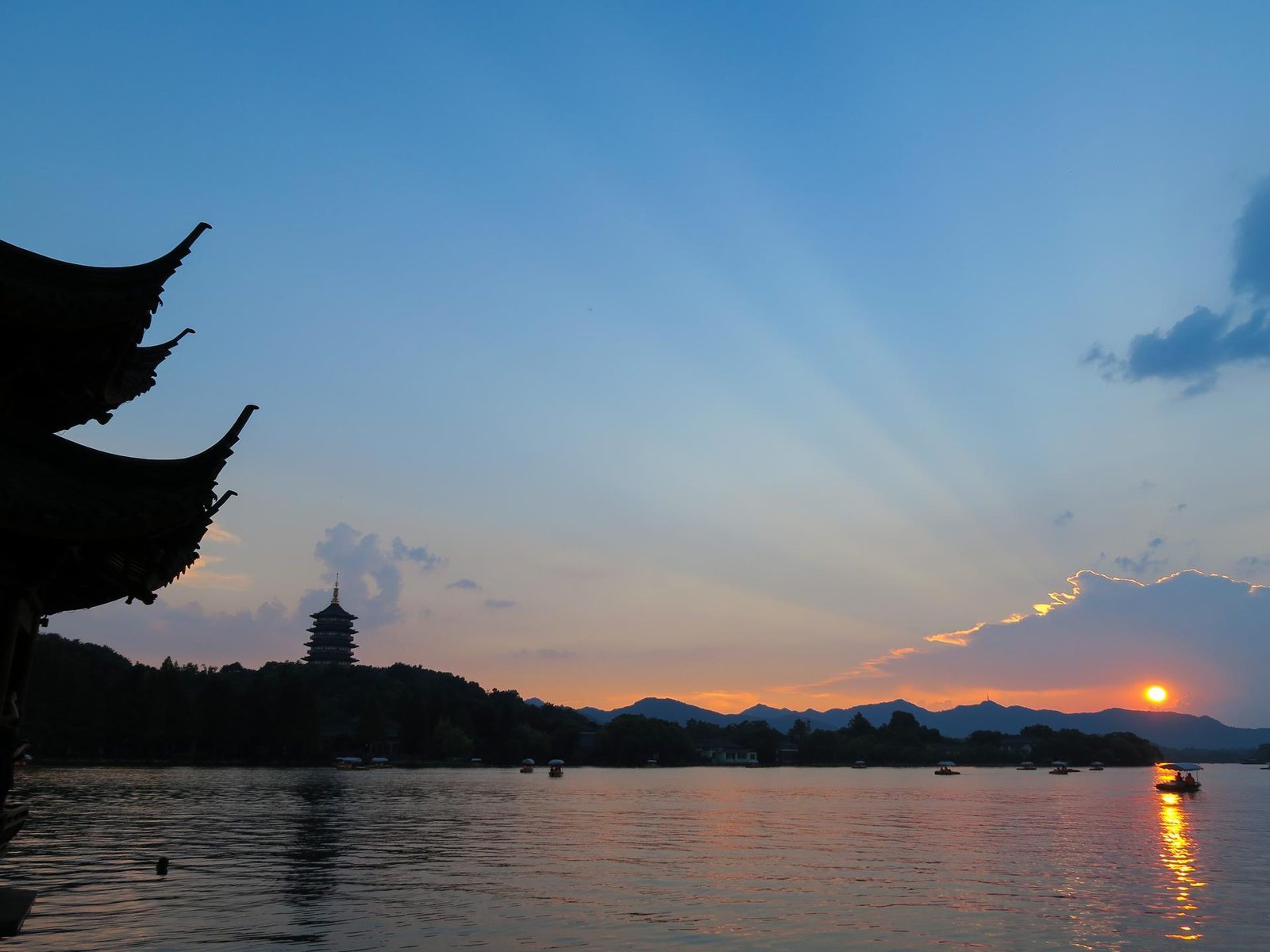
Days 1 and 2 are Hangzhou, off the beaten arc. Day 1 keeps to the lake’s quieter northwest: the lotus pools of Quyuan Fenghe in the morning, the hill paths and pavilions of Gushan on its island after lunch, and the free West Lake Music Fountain by the lakeshore at 19:30 — twenty minutes, arrive early for a rail-side spot. Day 2 climbs into the hills: the Lingyin Temple complex — free to enter, but real-name reservation through the mini program is required, booked at least a day ahead — with the cliff carvings of Feilai Feng beside it. The afternoon walks the tea country instead of the lake: the quiet wetland edge of Maojiabu or the ridge path over Bayberry Ridge, then the evening high-speed train to Huangshan North and the coach connection to Tangkou at the mountain’s foot.
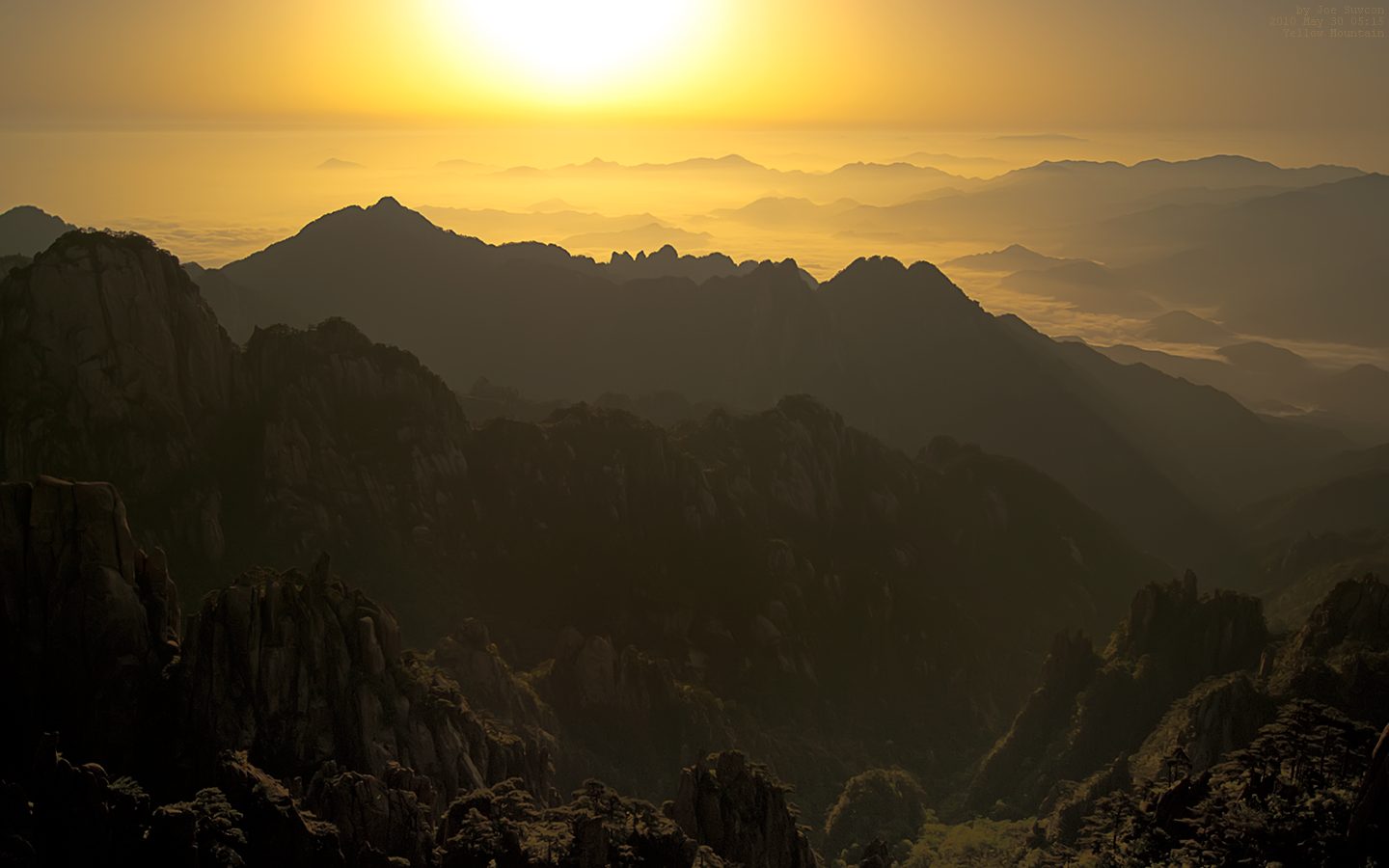
Days 3 to 5 are the mountain, with two nights on top. Day 3 rides the cable car up — three cableways plus the West Sea line serve the peaks, and hikers should note the walking-track turnstiles close at 15:00 — then settles into the North Sea Scenic Area with sunset at Shixin Peak, the classic first-night vantage. Day 4 is the big one: down and across the West Sea Grand Canyon, the gorge loop that is the park’s finest single walk, then the Bright Summit — the second-highest point on the range — and the balanced slab of the Feilai Stone on the way back. Day 5 crosses to the front range for the Jade Screen Scenic Area and the Guest-Greeting Pine, rides the cable car down, and lands in town in time for an evening along Tunxi Old Street.
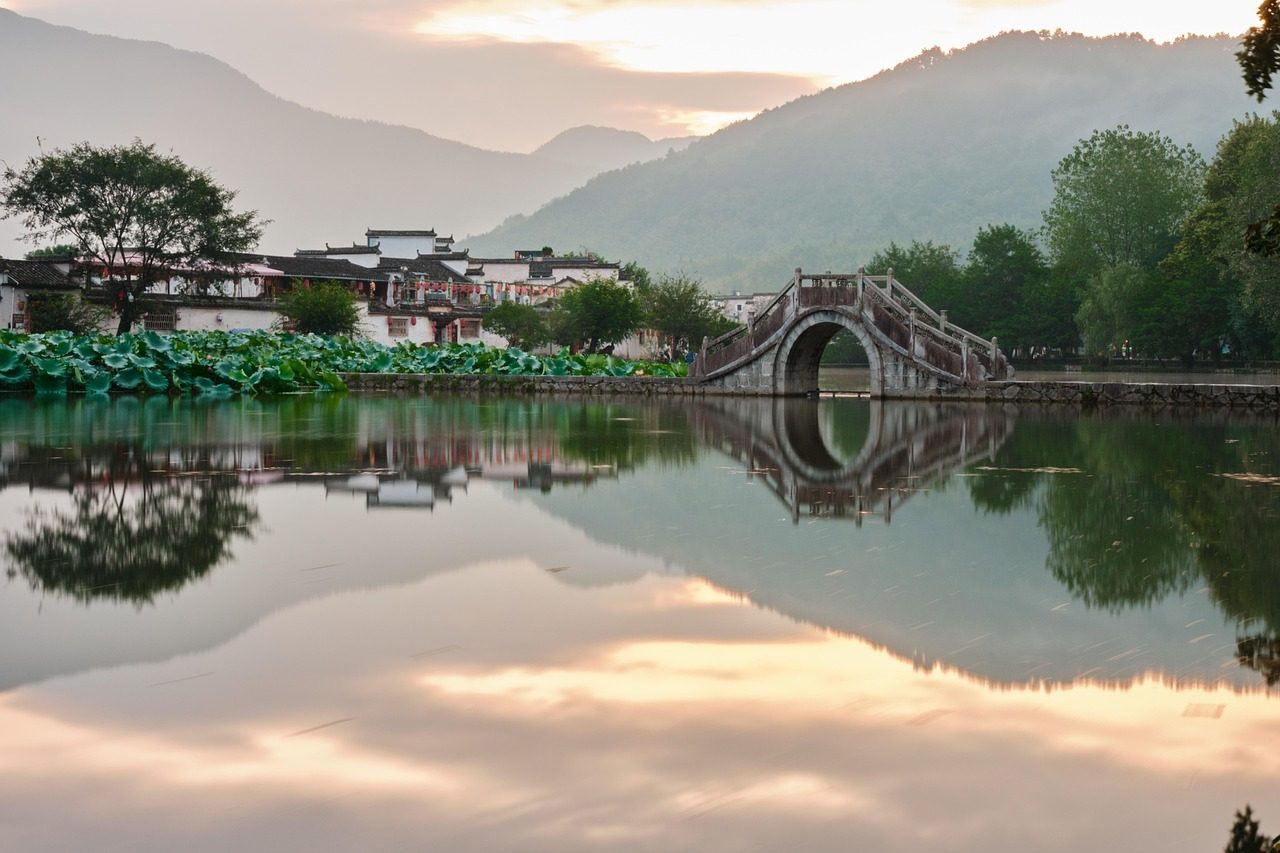
Days 6 and 7 are the villages. Day 6 belongs to Hongcun — ¥94 for a ticket valid three days with re-entry, worth it for a second dawn walk around Moon Pond. Day 7 gives the half day to Xidi — about an hour from Tunxi by bus — its memorial archways and merchant courtyards a deliberate quiet after Hongcun’s crowds, before the afternoon ride home.
Trade-offs
The second mountain night is the fixed point; almost everything else can move. Compressing Huangshan to one night saves nothing that matters — the canyon and the front range end up fighting for the same half day — so if the trip must shrink to six days, cut the Xidi half day and end after Hongcun. A five-day version is possible but poor: Hangzhou collapses to a single day and the route loses the tea hills that justify the city stop.
On the mountain, the West Sea Grand Canyon is the stamina test — a long stairway loop with real climbing, easy to shorten by riding the section cable car and skipping the inner gorge. Weather is the honest risk: the peaks sit in cloud for days at a time, and the second night on top is not luxury but insurance, buying a second chance at the sunrise and the canyon views. If the cloud never lifts, the villages gain the spare day instead.
If the trip can grow instead of shrink, the eighth day belongs to Hangzhou, not the mountain: the wetlands of Xixi Wetland Park on the city’s western edge — ¥60, and a slow boat-and-boardwalk morning — are the one addition that does not repeat anything already walked. For a longer east-coast arc that folds this route into Shanghai and Suzhou, the China 6 Day Itinerary and the China 14 Day Itinerary are the natural companions.